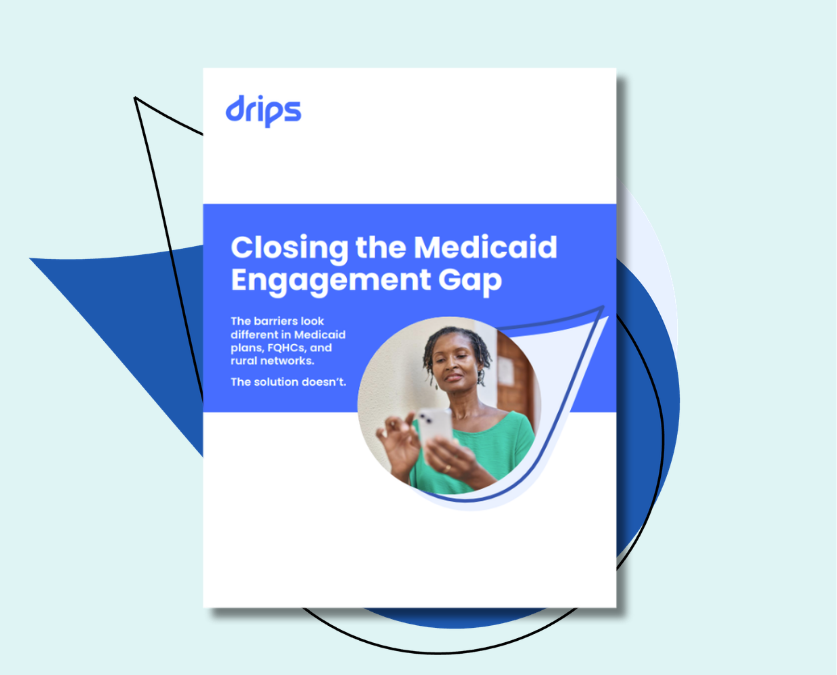
Closing the Medicaid Engagement Gap for FQHCs and Rural Networks


The Real Problem
Most conversations about Medicaid churn start in the wrong place. Plans, FQHCs, and rural networks treat it like an eligibility problem, when the numbers say otherwise. Only about 4% of targeted members respond to a mailed notice, a call, or a one-way text, and roughly 70% of coverage losses are procedural: people who never stopped qualifying, just never got a message they could act on.
Two federal changes take effect January 1, 2027, and both tighten the timeline. Renewals move to a semi-annual cycle and work requirements add up to 80 hours of documentation a month. The CBO projects 4.8 million people could lose coverage who never stopped qualifying.
None of this is a compliance problem. It's a response problem, and it gets worse every cycle a plan keeps relying on channels that already aren't working.
What This Document Covers
- Why a 4% response rate is a channel problem, not an eligibility one
- What the 2027 renewal and work requirement changes actually demand from member communication
- Why one message rarely closes a renewal: most members need three or more contacts
- Five criteria for judging whether a vendor drives completed renewals, or just activity
Who This Is For
Built for Medicaid health plans, FQHCs, and rural health networks working through the 2027 changes. Teams evaluating a vendor for that work will find the same five criteria useful.
.png)
.png)